
The Alpine Soil Glossary was developed by The Alpine Soil Partneship, Links4Soil and SOIL:OurInvisibleAlly team. Most important soil-related terms are (to be) listed in the table below.
You are cordially invited to contribute to the Soil Glossary by suggesting a term, adding an explanation, or improving translation by sending it to info@alpinesoils.org. Many thanks in advance!
The full glossaries can be found here, here and here.
Usage:
Scroll through the Soil Glossary. Click on the term to read an explanation.
- Soil classification & taxonomy
- Horizons & profile
- Parent material & constituents
- Structure & physical properties
- Biological Properties
- Chemistry & fertility
- Hydrology
- Erosion & geomorphic processes
- Soil use & management
- Representative soil types in the Alps
Soil classification & taxonomy
 What is soil?
Click / Tap to flip
What is soil?
Click / Tap to flip
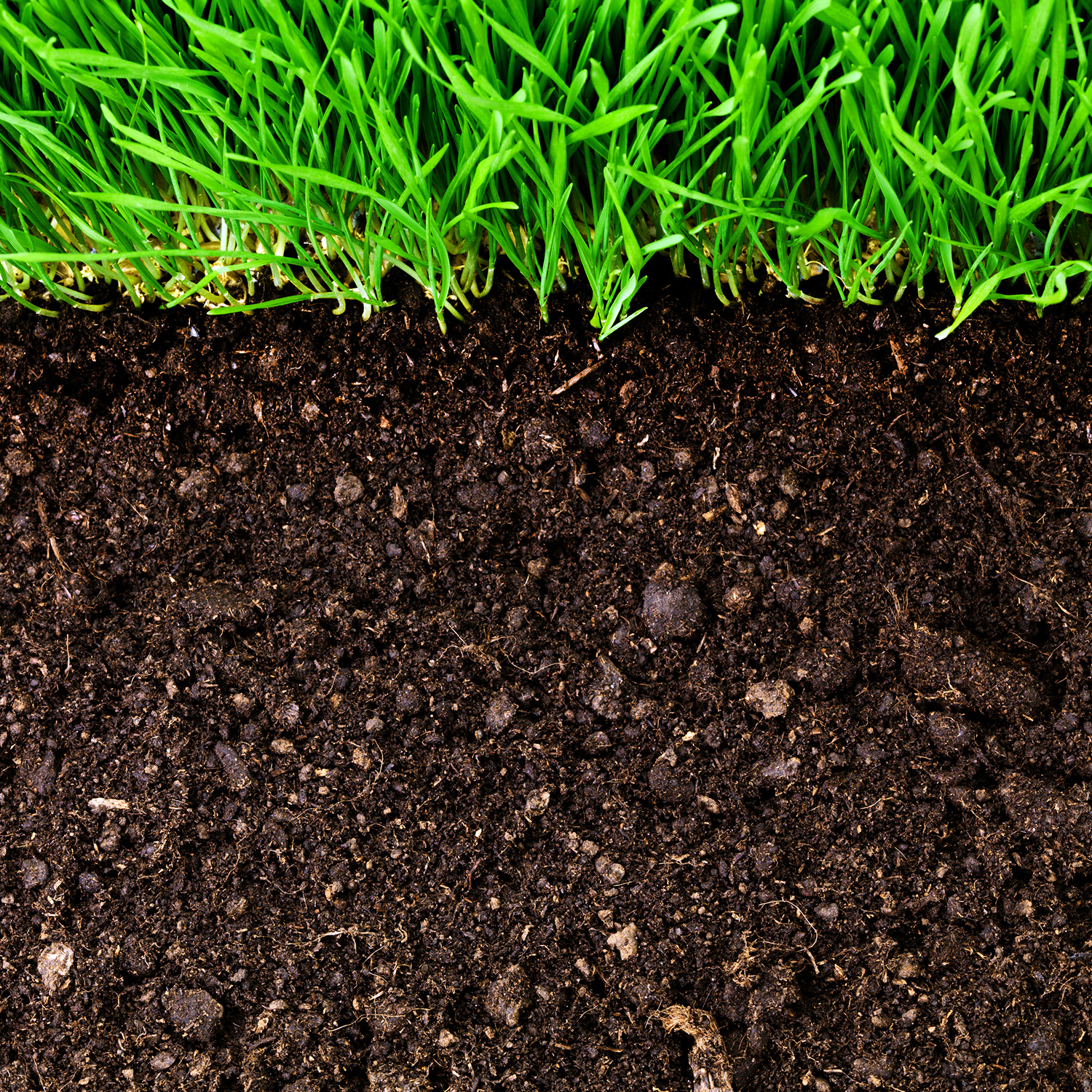
The unconsolidated mineral or organic material on the immediate surface of the Earth that serves as a natural medium for the growth of land plants. (ii) The unconsolidated mineral or organic matter on the surface of the Earth that has been subjected to and shows effects of genetic and environmental factors of: climate (including water and temperature effects), and macro- and microorganisms, conditioned by relief, acting on parent material over a period of time. A product-soil differs from the material from which it is derived in many physical, chemical, biological, and morphological properties and characteristics.
What is pedology?
Click / Tap to flip
The scientific study of soils and their weathering profiles.
What is pedogenesis?
Click / Tap to flip
Process of soil formation and development by soil forming factors: climate (mainly temperature and precipitation), parent material, living organisms (plants and biota), topography, time, water and Man.
What is alkaline soil?
Click / Tap to flip
Soil with a pH value greater than 7.0.
What is acid soil?
Click / Tap to flip
Soil with a pH value less than 7.0.
What are soil functions?
Click / Tap to flip
The characteristic physical and biological activity of soils that influences productivity, capability, and resiliency, which are important for different sectors, such as agriculture, environmental protection, landscape architecture and urban planning.
Horizons & profile
What is a soil horizon?
Click / Tap to flip
Single layer in soil profile with similar properties or material but which differs at least in one property, e.g. colour or texture from adjacent horizons above or below in the profile.
What is a B horizon?
Click / Tap to flip
A subsurface soil horizon characterised by the in-situ alteration of soil material or the accumulation of clay, iron, and other materials from the topsoil. The soil material shows substantial change relative to the parent material, and generally contains less organic matter and lower levels of biological activity than the surface topsoil.
What is an A horizon?
Click / Tap to flip
Mineral horizons that formed at the surface or below an O horizon which exhibit obliteration of all or much of the original rock structure and that show one or more of the following: (1) an accumulation of humified organic matter intimately mixed with the mineral fraction and not dominated by properties characteristic of E or B horizons; or (2) properties resulting from cultivation, pasturing, or similar kinds of disturbance.
What is topsoil?
Click / Tap to flip
The surface soil horizon (A) which is modified when cultivated, and designated Ap. See also surface soil. (ii) Fertile soil material used to topdress roadbanks, gardens, and lawns.
What is a soil profile?
Click / Tap to flip
A vertical section of soil horizons from the upper layer to the parent material, showing the arrangement of soil horizons typical for individual soil types and used as a basis for soil classification.
What is a C horizon?
Click / Tap to flip
The C horizon is a mineral horizon, excluding strongly cemented and hard bedrock, and the horizon is little affected by pedogenic processes and, by definition, lacks the properties of O, A, E, or B horizons.
What is a diagnostic horizon?
Click / Tap to flip
A recognizable soil layer with specific, measurable properties that serve as key indicators for classifying the soil.
What is a monolith?
Click / Tap to flip
Representative vertical section taken from vertical face of a soil profile pit or section, which represents arrangement of soil horizons; there are various methods of how to take and conserve soil monoliths.
What is soil depth?
Click / Tap to flip
Depth of soil profile from the top to parent material or bedrock or to the layer of obstacles for roots. It differs significantly for different soil types. It is one of basic criterions used in soil classification. Soils can be very shallow (less than 25 cm), shallow (25 cm-50 cm), moderately deep (50 cm-90 cm), deep (90cm-150 cm) and very deep (more than 150 cm).
Parent material & constituents
What is parent material?
Click / Tap to flip
Mineral or rock material on and/or from which soils are formed during pedogenesis (soil formation process); parent material is one of the five major soil forming factors.
What is sand?
Click / Tap to flip
Soil particles between 0.05 mm and 2 mm (in some countries 0.06 mm is the lower size limit), with low specific area and also used as a texture class name for coarse soil materials. Unlike clays, sandy soils do not shrink and swell on drying and wetting and, unless artificially compacted, are rapidly permeable.
What is a regolith?
Click / Tap to flip
The unconsolidated mantle of weathered rock and soil material on the Earth’s surface, sometimes considered to be loose earth materials above solid rock.
What is clay?
Click / Tap to flip
Soil particle smaller than 0.002mm or 2μm, with high specific area mainly influencing soil colloidal properties (see also colloid) as well as stability of soil structure: high stability in both wet and dry conditions; also a soil texture class.
What is silt?
Click / Tap to flip
Soil particles between 0.002 mm and 0.05 mm (in some countries 0.06 mm is the upper size limit), with high or medium-high specific area influencing stability of soil structure; also used as a texture class name for medium and medium-fine soil materials.
What is weathering?
Click / Tap to flip
The breakdown and changes in rocks and sediments at or near the Earth’s surface produced by biological, chemical, and physical agents or combinations of them.
What is loess?
Click / Tap to flip
Material transported and deposited by wind and consisting of predominantly silt-sized particles, forming important fertile soils.
Structure & physical properties
What is soil structure?
Click / Tap to flip
The combination or arrangement of primary soil particles into secondary units or peds. The secondary units are characterized on the basis grade (degree of distinctness), size, and type (shape; degree of distinctness).
What are soil agregates?
Click / Tap to flip
Stable structures composed of mineral particles, bound together by organic or inorganic cements.
What is soil porosity?
Click / Tap to flip
Volume of water and air that can be held in a soil; ratio of the volume of voids to the total volume of the soil.
What is a colloid?
Click / Tap to flip
Particle, which may be a molecular aggregate, with a diameter of 0.1 to 0.001μm; clay and soil organic matter are often called soil colloids because they have particle sizes that are within, or approach, colloidal dimensions.
What is soil skeleton?
Click / Tap to flip
Soil size fraction larger than 2 mm.
What is soil texture?
Click / Tap to flip
Numerical proportion (% by wt.) of sand, silt and clay in a soil. Sand, silt and clay content are estimated in the field, and/or quantitatively in the laboratory, and then placed within the texture triangle to determine soil texture class.
Biological Properties
What are Soil microorganisms?
Click / Tap to flip
Represented by protozoa, viruses, bacteria, fungi and algae. The most prevalent are bacteria and fungi, and depending on conditions (water and nutrients content, temperature, etc.) they can be in an active or non-active state. According to nutrient (and oxygen) demand, micro-organisms are divided to autotropic and heterotrophic, (aerobic and anaerobic) groups. Micro-organisms are a good indicator of soil status and quality.
What is soil biodiversity?
Click / Tap to flip
Soil biodiversity has been defined as the variety of life below ground, from genes and species to the communities they form, as well as the ecological complexes to which they contribute and to which they belong, from soil micro-habitats to landscape.
What are root exudates?
Click / Tap to flip
Substances released from plant root system in drops or small quantities of carbohydrates, organic acids, vitamins and many other substances essential for life of soil micro-organisms.
Chemistry & fertility
What are nutrients?
Click / Tap to flip
Plants require at least 16 elements to complete their life cycle. They are: C, H, O, N, P, K, Ca, Mg, S, Fe, Mn, Cu, Zn, Mo, B, Cl. Some of the lower plants in addition to the above elements require Co, V, Si. Among these C, H, O, N, P, K, Ca, Mg and S are required in large quantities and therefore called macronutrients and the others called micronutrients. The elements C, H, O are obtained mainly from air and water and the rest from the soil.
What is soil fertility?
Click / Tap to flip
A measure of the ability of soil to provide plants with sufficient amount of nutrients and water, and a suitable medium for root development to assure proper plant growth and maturity.
What is organic matter?
Click / Tap to flip
Consists of organic debris that accumulates at the surface under either wet or dry conditions and in which any mineral component present does not significantly affect the soil properties. Organic soil material must have organic carbon (organic matter) contents as follows: (1) if saturated with water for long periods (unless artificially drained), and excluding live roots, either: 18 % organic carbon (30 % organic matter) or more if the mineral fraction comprise 60 % or more clay; or 12 % organic carbon (20 % organic matter) or more if the mineral fraction has no clay.
What is fertilization?
Click / Tap to flip
Application of mainly mineral compounds, in order to increase soil fertility. In some cases, (e.g. liming) the purpose of fertilization is also to improve specific soil properties (pH, stability of soil structure).
What is humification?
Click / Tap to flip
A process, whereby the carbon of organic residues is transformed and converted to humic substances through biochemical and abiotic processes.
What is nutrient availability?
Click / Tap to flip
The amount of soil nutrients in chemical forms, accessible to plant roots or compounds likely to be convertible to such forms during the growing season.
What is mineralization?
Click / Tap to flip
The conversion of an element from an organic form to an inorganic state as a result of microbial activity.
Hydrology
What is groundwater?
Click / Tap to flip
Groundwater is that portion of the water below the surface of the ground at a pressure equal to, or greater than, that of the atmosphere.
What is leaching?
Click / Tap to flip
Removal of soluble materials from one zone in soil to another via water movement in the profile.
What is water infiltration?
Click / Tap to flip
Infiltration is the process by which water on the ground surface enters the soil.
What is water retention?
Click / Tap to flip
The ability of soil to hold water for a period that is longer than infiltration, normally 48h in a freely draining soil. It strongly depends on organic matter and bulk density. Soil texture also has an influence on water retention.
Erosion & geomorphic processes
What is erosion?
Click / Tap to flip
The wearing away of the land surface by water, wind, ice, gravity or other natural or anthropogenic agents that abrade, detach and remove soil particles or rock material from one point on the earth’s surface, for deposition elsewhere, including gravitational creep and so-called tillage erosion.
What is gully erosion?
Click / Tap to flip
A channel resulting from erosion and caused by the concentrated but intermittent flow of water during and immediately following heavy rainfall; gullies are deep enough (usually >0.5 m) to interfere with, but not obliterated by, normal tillage operations.
What is soil degradation?
Click / Tap to flip
Negative process often accelerated by human activities (improper soil use and cultivation practices, building areas) that leads to deterioration of soil properties and functions or destruction of soil as a whole, e.g. compaction, erosion, salinization.
Soil use & management
What are Soil ecosystem services?
Click / Tap to flip
Soil ecosystem services are a benefit to society, derived from a healthy ecosystem property or processes.
What are Soil functions?
Click / Tap to flip
The characteristic physical and biological activity of soils that influences productivity, capability, and resiliency, which are important for different sectors, such as agriculture, environmental protection, landscape architecture and urban planning.
Representative soil types in the Alps
What is podzolic soil?
Click / Tap to flip
Podzolic soil is typically found in coniferous forests and heaths and is characterised by strong leaching, which leads to an accumulation of iron, aluminium and organic matter in the deep B horizons. These materials have been transported (eluviated) from the overlying soil horizons (eluvial horizons) by water. Podzolic soils may have B horizons cemented by iron, aluminium and organic matter.
What is a peatland?
Click / Tap to flip
A generic term for any wetland where partially decayed plant matter accumulates; mire, moor and muskeg are terms used for peatlands in Europe and Canada.
What is peat?
Click / Tap to flip
Organic soil material with more than 50% of organic matter derived from plant residues with not fully destroyed structure.
What is a chernozem?
Click / Tap to flip
A zonal great soil group consisting of soils with a thick, nearly black or black, organic matter– rich A horizon high in exchangeable calcium, underlain by a lighter-colored transitional horizon above a zone of calcium carbonate accumulation; occurs in a cool subhumid climate under a vegetation of tail and midgrass prairie.
Contributors (Alpine Soil Partnership, Links4Soil and SOIL:OurInvisibleAlly team): Clemens Geitner (AT), Michele Freppaz (IT), Silvia Stanchi (IT), Thomas Spiegelberger (FR), Borut Vrščaj (SI).